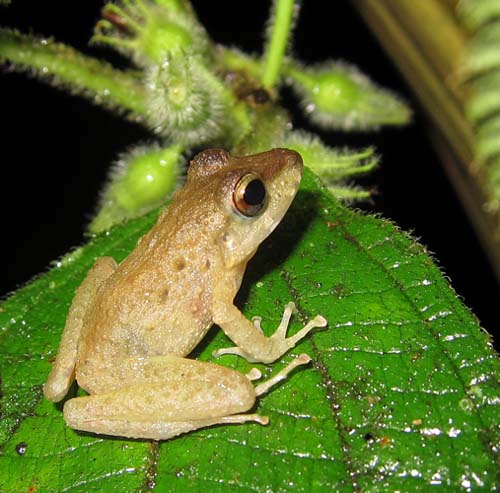
Wednesday, September 28, 2011

Cristalino Jungle Lodge Highlights from September 20-28, 2011

 I'm in Alta Floresta again for just a day before returning to Cristalino Jungle Lodge for my last two weeks of guiding there. It's been an amazing seven weeks so far. I've seen about 460 species of birds – the latest addition being a pair of Mealy Parrots here on the ground of the Floresta Amazonica Hotel last night. But a majority of those species have been within a 7.5-km radius of the lodge itself. Can there be a more biodiverse spot of that size anywhere else on Earth?

I've been to Cristalino several times before – three times while leading tours to this part of Brazil, each time for only 5-8 days at a time – and once before on a two-month volunteer guiding stint as now. So I'm not seeing many lifers, as you might guess. But I had just two this past week – very exciting! The first was a Crested Eagle, a bird I've been expecting from one of the towers or the river all month long. This one was from the old tower:

The other lifer was a Rufous-tailed Attila, apparently a very rare migrant traveling back to SE Brazil where the species breeds. There is one other photographed record from this region.

Now for just a few mish-mash photograph highlights from this past couple of weeks:
Bothrops brazili, Brazil's Lancehead. Yes, this one is venomous!

Broad-eared Free-tailed Bat, Nyctinomops laticaudatus

Common Opossum – with babies in her pouch!

 Eurybia halimede on Bromelia balansae. This genus of butterfly has the longest proboscis of all.

The metalmark Mesene phareus. Amazingly, this one landed overhead – most land under leaves ankle high and fly before you can get close enough to photograph.


 Dwarf Caiman


Spectacled Caiman

 The metalmark Pandemos pasiphae.

A Ctenid (wandering spider) guarding her eggs in Brazil Nut shell.

Red-fan Parrot

South American Tapir

The metalmark Zelotaea phasma. It doesn't look like much, but it was very exciting to find a metalmark not pictured in the book. D'Abrera also says it's rare in collections.

Thursday, September 15, 2011

Army Ant Horror Show at Cristalino

A quick update from Cristalino Jungle Lodge, where I'm a local resident guide for just three more weeks. I have tons of great photos, but I'll just share a few. I've had only about 3 hours of internet access every 7-12 days, so I have to rush this out.
 
Just yesterday morning, on my next-to-last day off, I found an army ant swarm. This was a small one, and there were no birds in attendance. But it still had some army ant skippers. So I stood my ground and watched the advancing front. Then a horrific drama unfolded as I first heard some scampering in the leaf litter. Here's a series of shots, needing little explanation. (Note: the last photo is about 5 hours later).


To end on a happier note, here are a couple nice leps on the walk. The first is the skipper Heronia labriaris and was attending the army ant swarm. It is a species probably rarely seen away from them.

This second one is a satyr, Splendeuptychia purusana, probably a specialist on bamboo.

Sunday, September 4, 2011

Baking and Birding at Cristalino Jungle Lodge

The last clients I had while guiding here at Cristalino Jungle Lodge were a young German couple who were interested in seeing any kind of wildlife and plants, learning about tropical ecosystems, and enjoying time on the river. So one exceptionally pleasant afternoon was spent drifting down the Cristalino River by kayak. We ended up seeing two Brazilian Tapirs at the end of the day, as well as a complete display flight of a Sunbittern, followed by three having some sort of interaction together on the beach.
Tayler (another volunteer guide here for a few months) and I are still mostly interested in birds, so we were quite pleased to successfully show this couple a gorgeous male Rose-breasted Chat in a small canopy flock on our hike up the Serra (a small granite mountain) a couple days ago. That's not easy even with avid birders. But even though they were clearly impressed by the glowing colors of this difficult-to-see bird, they will surely have better memories of the rich, lemon-ginger perfume of the Cacaui trees (Theobroma speciosum) that permeated the forest understory that day. Here's the cauliflorous tree and the people being intoxicated by the smells.


I've since had a few days off this week and have begun to spend more time in the Cristalino kitchen with the wonderful staff. Arlene is the main cook and seems to always welcome my presence.


I've taken their whole-grain bread recipe and added a twist. Using half the amount of yeast called for, I put the loaves in the refrigerator for the second rise overnight. They all exclaim that the bread is much better – in both taste and texture. Now I'm afraid I'll get called to the kitchen each day to make the bread.


Another thing I got to do while not with clients is hike up a new trail with a few of the other guides. It's one of the longer trails at about 1.6 km each way, but it goes to the top of a different granite dome on the right bank of the Cristalino River (right as you face downstream). I visited here briefly in October 2006 before they had scouted out the best route to the top and had to scramble and bushwhack up a bouldery slope, but now the trail is quite good and not steep at all. And it was on this new route that I finally found my most-wanted plant here – the only cycad known to grow in this region. Listed as Zamia cf. ulei by the team of botanists including specialists from Kew Gardens, it's a very primitive conifer that looks something like an immature palm but has the flowers more like a pine. Furthermore, cycads are the host plant for a very small and aberrant group of hairstreaks called cycadians. I haven't heard of anyone having seen the Amazonian species of Eumaeus here, but if it does occur, this would be the place to look. I think I'll be back soon.


Friday, August 26, 2011

Cristalino Jungle Lodge Highlights from August 24-30, 2011

Here are some of the non-bird highlights from my own little blog from this past week.

I'm also posting weekly updates (Tuesdays) to http://birdingblogs.com, sending "From the Field" reports for the WINGS front page (http://wingbirds.com), and you can also read occasional updates from Stephen Boddington's blog at http://blog.belgianbirding.com/.

Belus Swallowtail, Battus belus


Brown Capuchin


OK, a bird – can't leave out this amazing Harpy Eagle!


What the heck is this? I'm calling it the Jujube Caterpillar and think it might be once of the fancy hairstreaks.
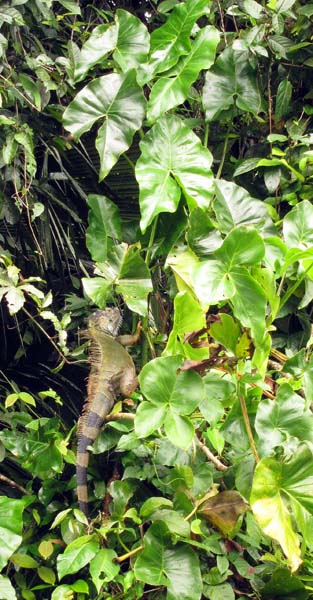

A puddle party by the beach.


This brilliant yellow Tabebuia sp suddenly came into bloom just yesterday. We were all wondering, "where in the heck did that tree come from?"


Tupinambis paulensis, a huge and rarely-photographed lizard in the whiptail family. Of course, my friend Michael Harvey from Broward College knew what it was the moment I sent him the photo.


A Hetaerina rubyspot


A jumping spider, probably in the genus Phidippus on Tayler Brooks' wrist.


Sunday, August 14, 2011

July Herping in Costa Rica

I recently spent 2 1/2 weeks birding in Costa Rica in the middle of July. Being the mild but very humid wet season, reptiles and amphibians could not be ignored. It's a great time for birding, but if you're looking for herps, this is the perfect time to visit!

While enjoying a sunny morning near out hotel in the San José area, we spotted a Green Spiny Lizard, Sceloporus malachiticus.

I was then joined by by friend Diane for a scouting trip to Bosque del Rio Tigre on the Osa Peninsula. It rained during our entire time here, but we still saw great birds, such as the endemic Black-cheeked Ant-Tanager, as well as Yellow-billed Cotinga and Mangrove Hummingbird on the way out. Herps here were:
Common Tink Frog, Diasporus diastema

unknown tink frog, possibly Pristimantis cruentus?

Masked Treefrog, Smilisca phaeota

Narrow-headed Treefrog, Scinax elaeochrous

Smoky Jungle Frog, Leptodactylus pentadactylus

Then on the birding tour I was leading, I managed to take pictures of a few cool herpes. At Rancho Naturalista was this Pug-nosed Anole, Norops capito.

Tortuguero National Park was very wet, which was good for frogs, such as this Strawberry Poison Frog, Oophaga pumilia.

This Spectacled Caiman was along the flooded forest trail at night.

We heard a lot more frogs, but when the sun shone, lizards came out.
Green Basilisk, Basiliscus plumifrons

Green Iguana, Iguana iguana

Stream Anole, Norops oxylophus

We progressed to Maquenque Ecolodge near Boca Tapada, and there were some great things here.

American Crocodile, Crocodylus acutus on the Rio San Carlos.

Green-and-black Poison Frog, Dendrobates aureus was along the trails.

Our second Pug-nosed Anole, Norops capito of the trip was very different in color.

We had two Rainforest Hognosed Pitvipers, Porthidium nasutum along the trails. The first was very small, and I apparently stepped on it, making it move so it was spotted by the participant in the trail behind me.

I went out on my own late one night and found a few cool things: Red-webbed Treefrog, Hypsiboas rufitelus

Boulenger's Snouted Treefrog, Scinax boulengeri

Rough Coffee Snake, Nothopsis rugosus, a very strange colubrid snake with a boid-like head and a very stiff, non-reactive behavior when I picked it up.

Our final lodging was at Celeste Mountain Lodge on the slopes of Tenorio National Park. They have a tiny pond here which was home to:
Hourglass Treefrog, Dendropsophus ebraccatus

Red-eyed Treefrog, Agalychins callidryas

and Forrer's Leopard Frog, Lithobates forreri.

On a branch above their forest trail was by far the prettiest snake I've seen in Costa Rica: the big-headed Eyelash Pitviper, Bothrops schlegellii.