Sunday, July 28, 2013

A Brief Report From Oregon


I’m in the middle of leading a private WINGS tour for six people through my home state of Oregon. This itinerary is nearly identical to my regular Oregon tour (some years in May, other years in summer), and I lead it just the same; “private” only means that it wasn’t advertised on the WINGS website and you couldn’t sign up because you weren’t invited.  About a quarter of the tours I’m leading this year happened like this.

Days are long for me, but it’s been great fun, and it’s really nice to have a group who already know each other well (five of them have been on previous tours with me) and for whom many of my favorite birds are lifers, not really surprising given that they are all from the East Coast. Such as today’s Spotted Towhee. The bird that got me started looking at birds when I was 14 was the Oak Titmouse. But the one that set the hook was the stunningly beautiful Spotted Towhee, and I got to look at it again through those eyes today.

Besides – Oregon is just beautiful. The top photo is from dawn this morning at Marys Peak west of Corvallis, the coastal fog oozing up to the Coast Range divide but burning off before reaching the Willamette Valley. Not long after my taking this photo, we were looking at a Sooty Grouse on the road (which hadn’t been there on the way up). A little later we had Mountain Quail family on a side road (I almost stepped on a chick) and later yet another one even further down on the main road.

Other highlights from the past days:

Two Tricolored Blackbirds at Fernhill Wetlands in Forest Grove on our first morning.

A particularly bright and confiding Western Tanager near Netarts, responding to my imitation of Northern Pygmy-Owl. Earlier that morning a real owl responded and came in for great views.

A Peregrine Falcon family at Yaquina Head, this one surely just exhausted from flying in the strong winds all day.

A surprise Laysan Albatross (rare in summer) on the pelagic trip out of Newport yesterday.

And a vagrant juvenile Franklin’s Gull at the Philomath Sewage Ponds (referred to locally as the Philomath Poo Ponds) after our Mary’s Peak birding today; it was found by Doug Robinson who posted the info, which Alan Contreras saw and texted to me. We would have missed it otherwise, and it was a lifer for at least one of the participants (and a county bird for me and my local birding friends Alan, Hendrik, Oscar, Tristen, and Jamie, who all showed up while we were there).


Tomorrow morning another early start, so I really have no business blogging now.

Friday, July 26, 2013

National Moth Week!

I just found out this afternoon, while listening to Science Friday on my way to the grocery store, that it's National Moth Week.

So, even though I'm leading an Oregon tour right now, enjoying such great birds as Northern Pygmy-Owl and Hermit Warbler, I'll post a few pictures of some moths from an overnight trip I did to the Pinal Mountains with my friend Margarethe Brummermann (her blog here) earlier this month.

Here's Margarethe installing the bug sheet, which was later illuminated with a mercury vapor and two ultra violet bulbs.

Towards the end of the evening, we had at least 16 Manduca florestan sphinx moths (among four other sphingid species), and many other smaller moths and insects.

If you look very closely, you will appreciate the beauty in every species. This tiny noctuid is Ponometia venustula, easy to identify with that silver dash in the wing.

This erebid, Bulia deducta, is one I can almost never figure out – adults are amazingly variable. It's quite common, even in my Tucson yard, as its caterpillar food plant is mesquite.

This pretty little thing is Cacozelia basiochrealis, in the family Pyralidae. I don't know anything about it, other than that I'd never seen it before.

You have to look very closely to see the beauty in the fine pattern and interesting shape of this Givira lotta, the Pine Carpenterworm Moth. It's in the family Cossidae, the same as the huge hulks I recently posted from Borneo. (Speaking of which, yes I will have more to post on that eventually).

I am always mesmerized by the intricate patterns and colors of Melipotis indomita, the Indomitable Melipotis. It's extremely common and widespread – I even had it in the Galapagos once.

The prettiest for last are three species of tiger moths, subfamily Arctiinae.

Lophocampa argentata, the Silver-spotted Tiger Moth

Hypercompe permaculata, the Many-spotted Tiger Moth

Arachnis picta, the Painted Tiger Moth

Many thanks to Maury Heiman and Bob Patterson at Bugguide.net for the many species IDs.

Thursday, July 11, 2013

Hopping Over to Bosque For a Rail

This past Sunday, Matt Daw, a birder from North Carolina was taking this video of a Least Bittern at Bosque del Apache National Wildlife Refuge when a surprise walked into view behind the bittern. Surprise is putting it mildly, and I'm almost certain that the video clip was edited to end just before a stream of expletives uncontrollably let loose. It is the first record of Rufous-necked Wood-Rail for North America, not a species anyone predicted would be found here.

See an interview with Matt here.

Since such an out-of-range occurrence for this species is without precedent, some people are suspicious about the origin of this bird. The debate centers around the plausibility of the bird's either being an escaped or released bird that was brought here from its tropical home or its ability to travel this distance on its own. The New Mexico Bird Records Committee will have their work cut out for them when they decide on whether to accept it or not.

In the meantime, anyone banking on acceptance is rushing to Bosque del Apache, including me. Yesterday I rode over with my birding friends, retired doctors Peter Salomon and John Mueller, as well as my friend Celina. I did this very drive with Peter and John (and our friend Gene Loring) over 12 years ago when we went to the Sandia Crest to see the rosy-finch spectacle. This time we stopped long enough for me to get a shot of this famous (to birders) sign, just north of Deming. Whether or not the bird reference was intended by the highway department isn't known, but the only species in the immediate area were House Sparrows and Eurasian Collared-Doves (not too far down the road were Chihuahuan Ravens and Swainson's Hawks).

We arrived at the refuge almost exactly 5 hours later, 370 miles from our meeting point in NE Tucson. Using the good directions provided by the NM RBA service compiled by Matt Baumann, we arrived at the spot and waited and watched. Suddenly it was there, walking just within the edge of the cattails at first, then finally venturing out into the open to catch critters in the shallow mud.


We watched it for about 15 minutes before it vanished into the cattails. Elated over our success, we babbled all the way back to Tucson, Celina and I knitting in the back seat.

Sunday, July 7, 2013

You Made Your Own Pita Bread?


My gut reaction, to hearing this question with a tone of incredulity was,

"What? You mean to say you don't make your own pita bread?"

But really, it is kind of ridiculous if you think how readily available this item is at your local grocery store. It actually took me a moment to go back to those times though.

Once you've done it – made the relatively low hydration dough over the course of 2 days and let it rise (very little effort and time involved, I might add), portioned out the balls and rise once more, rolled them out a bit, let them rest a few minutes, rolled them out even more, then rise for just 15 minutes, and then baked each one for just a couple minutes in a super-hot oven – how can you ever go back? Experiencing this transformation on so many levels and savoring the end result is priceless.

Really? You don't make your own pita bread? Why on Earth not?

Friday, July 5, 2013

Dawn in the Saguaros

This past Saturday my friend Celina and I made a dawn field trip to the Saguaro forests northwest of Tucson in search of a special item. As we crossed the agricultural flats of Marana, a red sunrise warned us of the heat to come – the low temperature in most areas this morning was only 85°F, and the forecast said it was going to be well over 100.

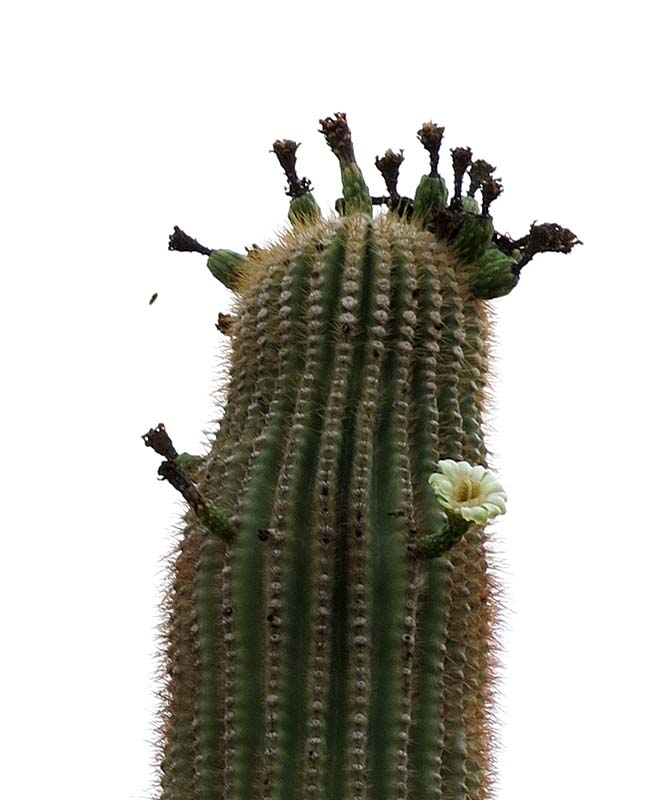
If you have lived amongst Saguaros for a few years, you take them for granted, and most people here don’t even see them any more. But I try to remind myself how utterly amazing and bizarre this huge cactus is.

They bloom any time from April though June, with the peak sometime in May. But the season is spread out a bit, and even now you might see a stray flower like this one.

What we had hoped to sample were the sweet fruits of the cactus. Unlike the indehiscent fruits of prickly pear (like tiny watermelons, their flesh is solid and moist, and the fruits do not open), the carpels of the Saguaro fruit split like the peel of a banana, exposing a combined mass of the inner pulp and seeds, which usually separate from carpel walls, fall from the plant, and dry in the sun.

Everything eats them – squirrels, birds, ants – you name it. Even people. If you find a dry one, preferably one that hasn’t fallen into the dirt but instead baked in the sun after falling into the branches of an acacia or other plant  below, the crunchy morsel is like candy. But we were too early to find but just a few – most of the fruits were still unripe at the tops of the columns, and those that were the first to ripen and fall were snatched up by the eagerly-awaiting wildlife. Perhaps in a week or two, when the main mast falls and most animals are saturated, there will be more lying around. There is no more pulp and just a few seeds left to this fruit, perhaps eaten by a Collared Peccary.

But we enjoyed just poking around in the desert, looking at plants and critters. Most productive was a dead Saguaro that had fallen months ago but was still a rotting mass of flesh beneath its flattened trunk. It was teeming with beetles and their larvae.

Identifiable only as far as genus by me is this clown beetle, Hololepta, in the little known but very large family Histeridae.

This hyper little thing is a rove beetle, and so far I’ve managed to identify it only as far as family – Staphylinidae. It looks a lot like an earwig but is actually a beetle with short elytra that hide its wings; earwigs are a different order altogether.

Back at home, it was indeed very hot – up to 109°F. This Bronzed Cowbird was seeking shade in the mesquite right outside my window.


And this juvenile male Costa’s Hummingbird, rather a rarity in my yard, wisely took up residence in the cool(er) breeze emitting from my back door (left open a crack to let the moist air from my evaporative cooler vent) and hung out on the plant stand all afternoon.

Sunday, June 30, 2013

My Big Fat Idaho Blog

I don’t get to blog about Idaho very often. I was there briefly in 1998 just to rent a Jeep to do some atlas blockbusting in Oregon, and then in September 2009 I was there for the Western Field Ornithologists annual meeting.

Last weekend I was in Boise for another meeting, this time the annual meeting of the American Penstemon Society, held jointly with the Idaho Native Plant Society. Attending was the great idea of my friend Jarid Simons who invited me. Neither of us are particularly nuts about penstemons the way some people are (the Brits and other Europeans have been hybridizing them for decades), but we both like them a lot, and the field trips promised to be a botanizing bonanza.

The first evening was a reception at the Idaho Botanical Garden a couple miles east of downtown Boise. There we enjoyed the varied gardens next to the old penitentiary, and I photographed this Agapostemon metallic green bee in a four-o-clock.

The main destination of our Saturday field trip was Leslie Gulch on the Oregon side of the border, but our carpool first made a stop along Highway 95 still in Idaho in a hilly area of sagebrush steppe where Penstemon cusickii was the main target.

We were soon in Oregon, turned off on a couple dirt roads, and our leaders Jean Findley and Steven Love pulled over by a draw, opposite of which were some barren patches of exposed, eroding dirt.

On these bare patches one finds the rare and local Penstemon miser, and we managed to find several plants, but only one had one flower left.

I noticed a few plants had some caterpillar damage, looked a little closer and noticed these little caterpillars which I recognized as a checkerspot or some such brushfoot but had no book. Later Jim Brock confirmed that they are Variable Checkerspot, which is indeed known to eat Penstemon, but this species is probably a new food plant record.

Another nice plant from here was this ray flowerless daisy Erigeron bloomeri.

We then drove all the way down Leslie Gulch to where the road ends at the upper end of Owyhee Reservoir – so low this year that it will be all the way down to the river bed by the end of the summer.

Our main stop was Dago Gulch, a side canyon of this geologically fascinating area. In fact, it’s the unique geology – exposed ash flows of a very certain eruption from Mount Mahogany – that probably explain the presence of so many localized species of plants found only here and in other areas around Leslie Gulch.

Senecio ertterae, Ertter’s Groundsel is one of these extremely local species found only here.

Another is Mentzelia pakardiae, Packard’s Stickleaf.

I managed to log 22 species of birds on our short hike here, including several Black-throated Gray Warblers, lots of Lazuli Buntings (which almost everyone who cared got to see), a few chasing White-throated Swifts, and a late migrant “Western” Flycatcher.

Predictably perhaps, I paid more attention to the bugs that anyone else did. This cooperative Lorquin's Admiral was one among several that I saw.

Two-tailed Swallowtail, our largest butterfly in the West, on the thistle Cirsium inamoenum.

These cicadas, probably Okanagana bella, were so abundant on all of the trees in the wash of Dago Gulch — some willows had several dozen — I figured they must be related to the periodic cicadas of the East (but they are not).

We had a few more stops where our field trip leaders knew of some unusual plants that grown on poor soils.

At this stop we saw the very local and unusual Ivesia rhypara. In the rose family and described in 1977, its name is a curious Cockney-like play on words: “Rhypara” is Greek for “grimy,” which sounds like Grimes; James Grimes was one of the first to discover the plant.

Our last stop saw John Wise photographing a Penstemon deustus growing right out of a boulder, earning its common name Hot Rocks Penstemon.

–––

Sunday saw us heading the same southwesterly direction from Boise, but staying on the Idaho side of the border. We met on the Snake River with clouds of Cliff and Bank Swallows flying over, then once all were present we moved on to an area call Chalky Butte, as yesterday starting in the sagebrush steppe.

At this elevation, our target, the early-blooming Penstemon acuminatus was long past its prime, but there were plenty of other interesting plants in this slightly saline soil. One of the coolest was this Astragalus kentrophyta var. jessiae, Spiny Milkvetch, looking more like a spiny phlox rather than a pea.


But the best find at this stop was this Western Rattlesnake, Crotalus oreganus.

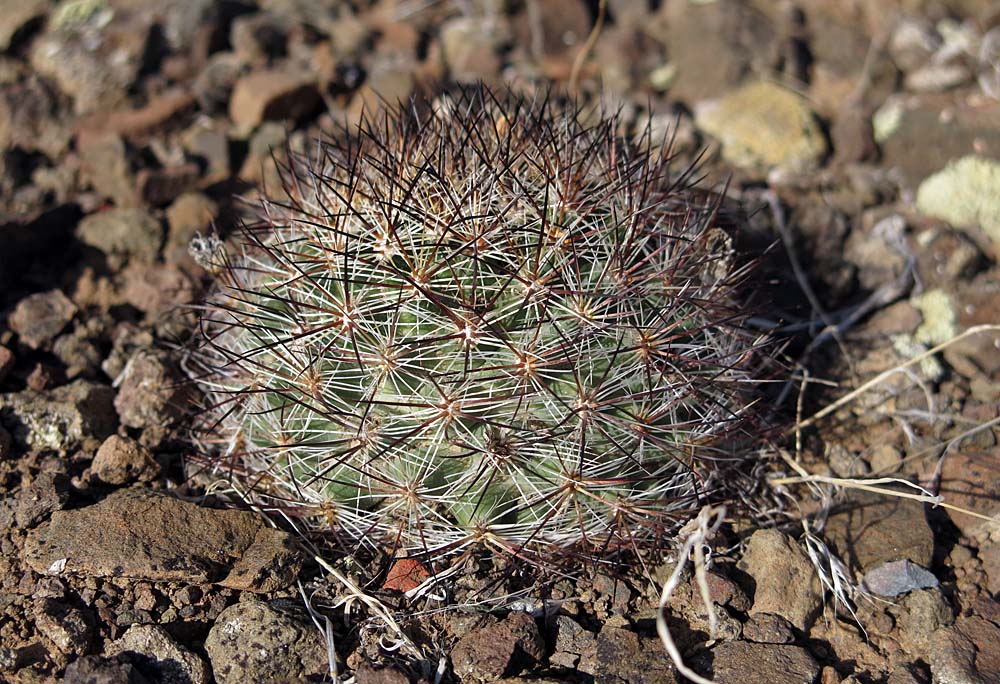
The next stop was on the way to the hidden Renynolds Creek valley. The bare soils at the pass had a population of the local ball cactus Pediocactus simpsonii. I hadn’t seen this plant since my Oregon bird atlassing on the northern ridges of Steens Mountain above Juniper Lake back in 1998.

A Long-nosed Leopard-Lizard was also fun find here.

Variegated Meadowhawks were at nearly every stop this weekend, even far from water.

Our last stop in the warm, dry lowlands featured this Tiger Whiptail (along with some roadside Penstemon speciosus).

We then spent the middle hours of the day a much higher elevation below War Eagle Mountain on the road to the ghost town of Silver City. The mosaic of Douglas-fir, Curlleaf Mountain-mahogany, and even patches of Subalpine Fir created a sky island effect not too different from the mountains of SE Arizona. Common birds here were Yellow-rumped Warbler, Cassin’s Finch, and House Wren – very different from the sagebrush flats.

I didn’t take very good notes, so I’m guessing here when I call this one Penstemon humilis.

And this one Penstemon rydbergi. The plant list we were given also had P. deustus, and one of these might be that. Oops.

Some other nice plants at this stop were:
Allium acuminatum

Eriogonum umbellatum

and Antennaria sp., Pussytoes

Bug-plant interactions included these buprestid beetles, both Acmaeodera idahoensis, despite having different markings, on Hieracium cynoglossoides.

And this gorgeous Juniper Hairstreak on Eriogonum heracleoides.

Minus the plant, we have this Machimus sp. robber fly with some tiny thing in his jaws. I can’t even be certain which order it is in, but I think perhaps Homoptera. [added note: Thanks to Andy Hamilton at Bugguide.net, the prey item is a Hemipteran (Homoptera doesn't exist any more), more precisely a leafhopper in the genus Ceratagallia. There are about 55 species in North America, and you need a better photo than this, or perhaps a specimen, to ID it to species]

Finally, we made a stop at the highest elevation – New York Summit on the west side of War Eagle Mountain, where the windswept Low Sagebrush flats didn’t look to promising at first glance. But this Astragalus whitneyi ssp. circumvagum, Balloonpod Milkvetch was quite fetching.


Even more impressive was this patch of the stunningly gorgeous Lewisia rediviva, Bitter Root, an unusual member of the portulaca family.


It was great fun to see some new areas, meet some really nice people, and be out in the field with "my kind of people" who stop and look at every plant and even know their names.